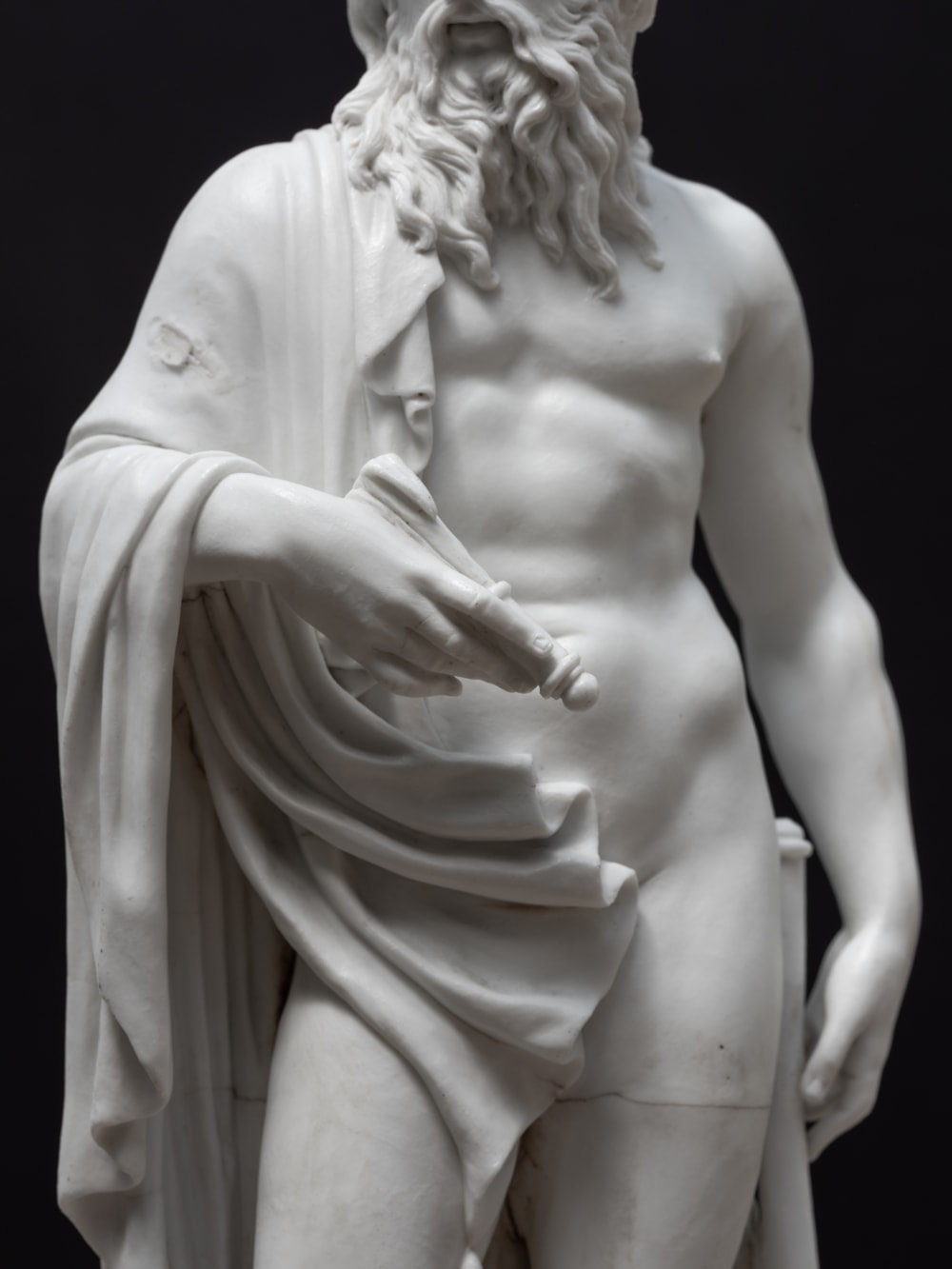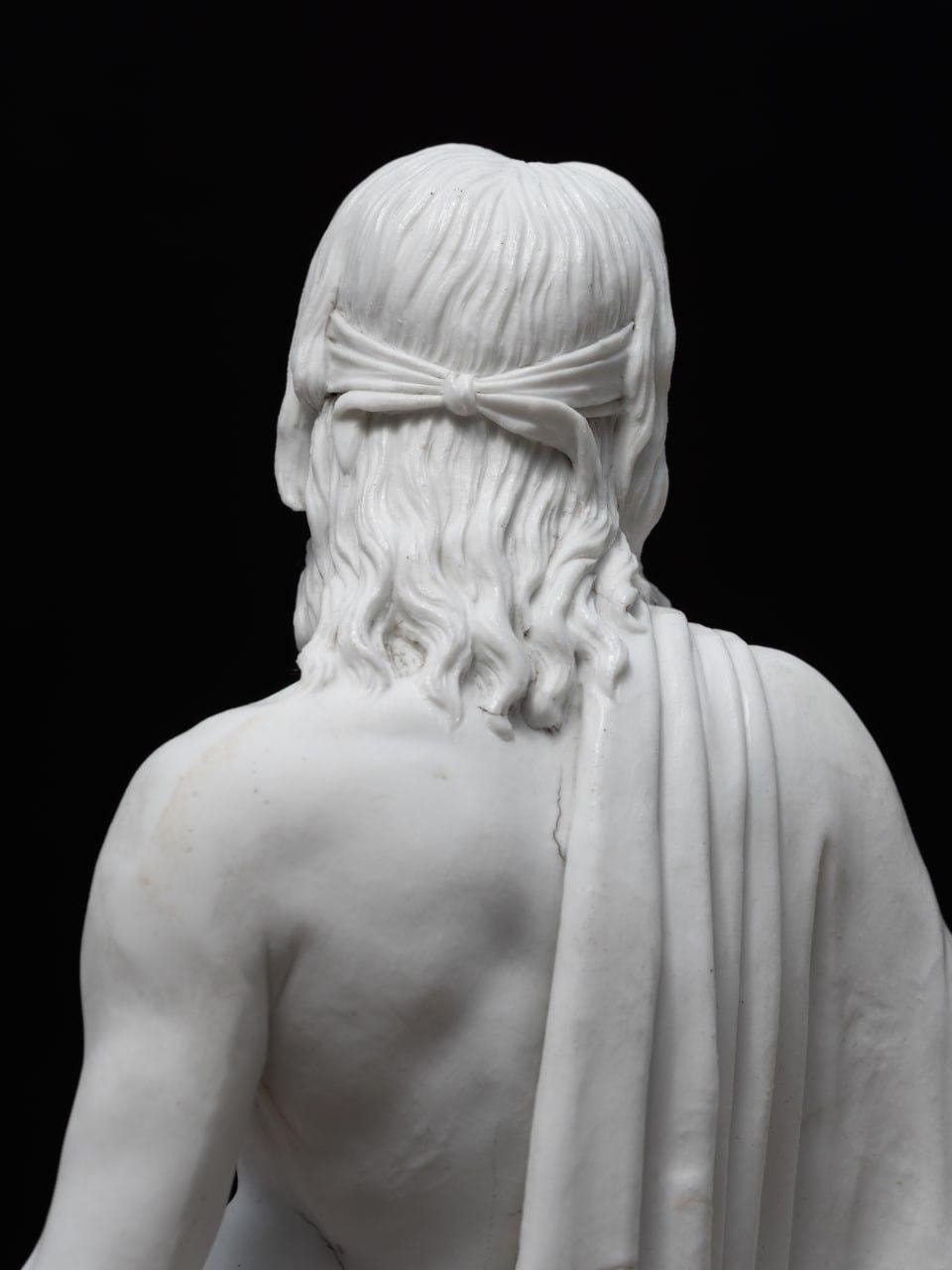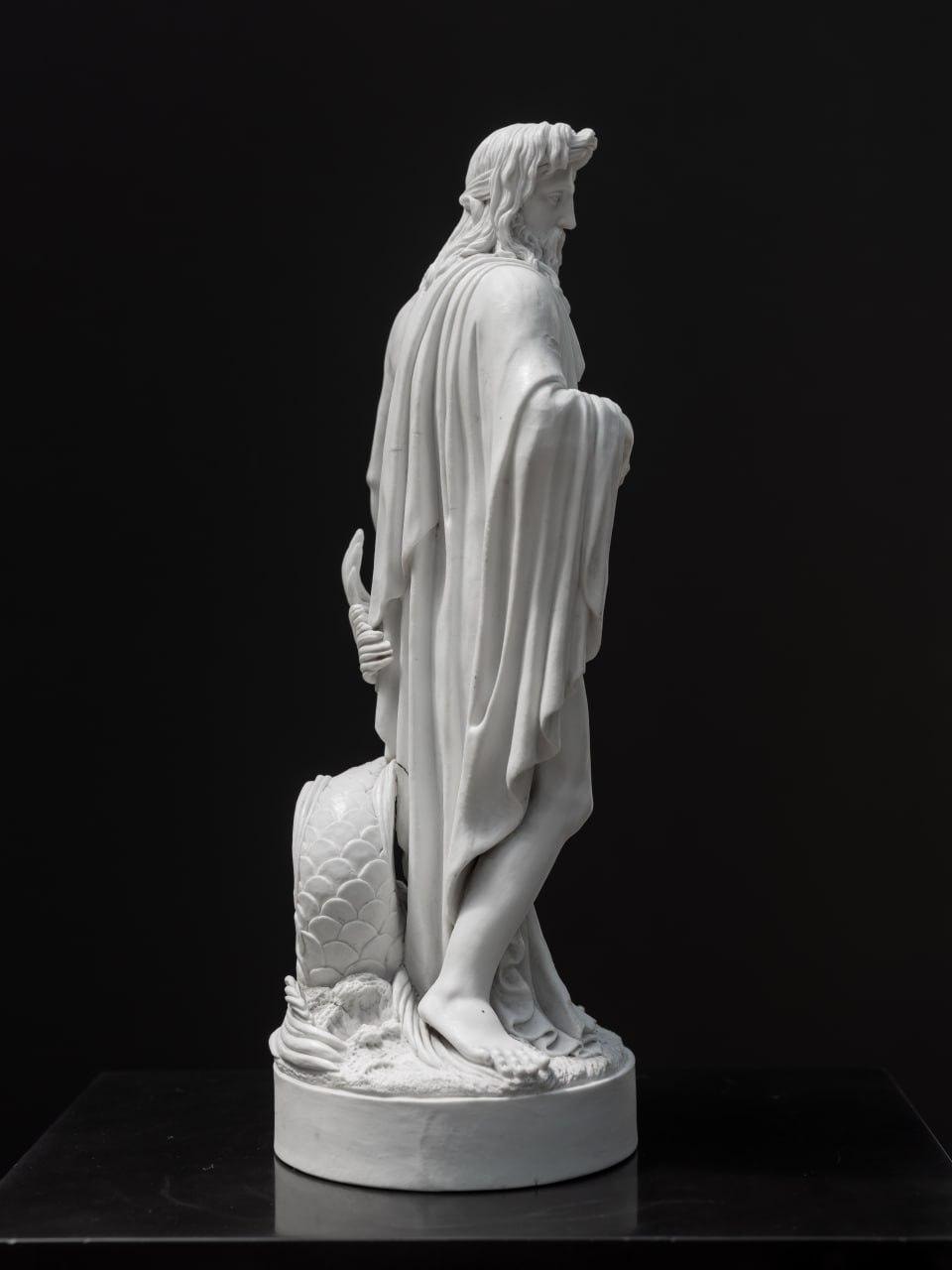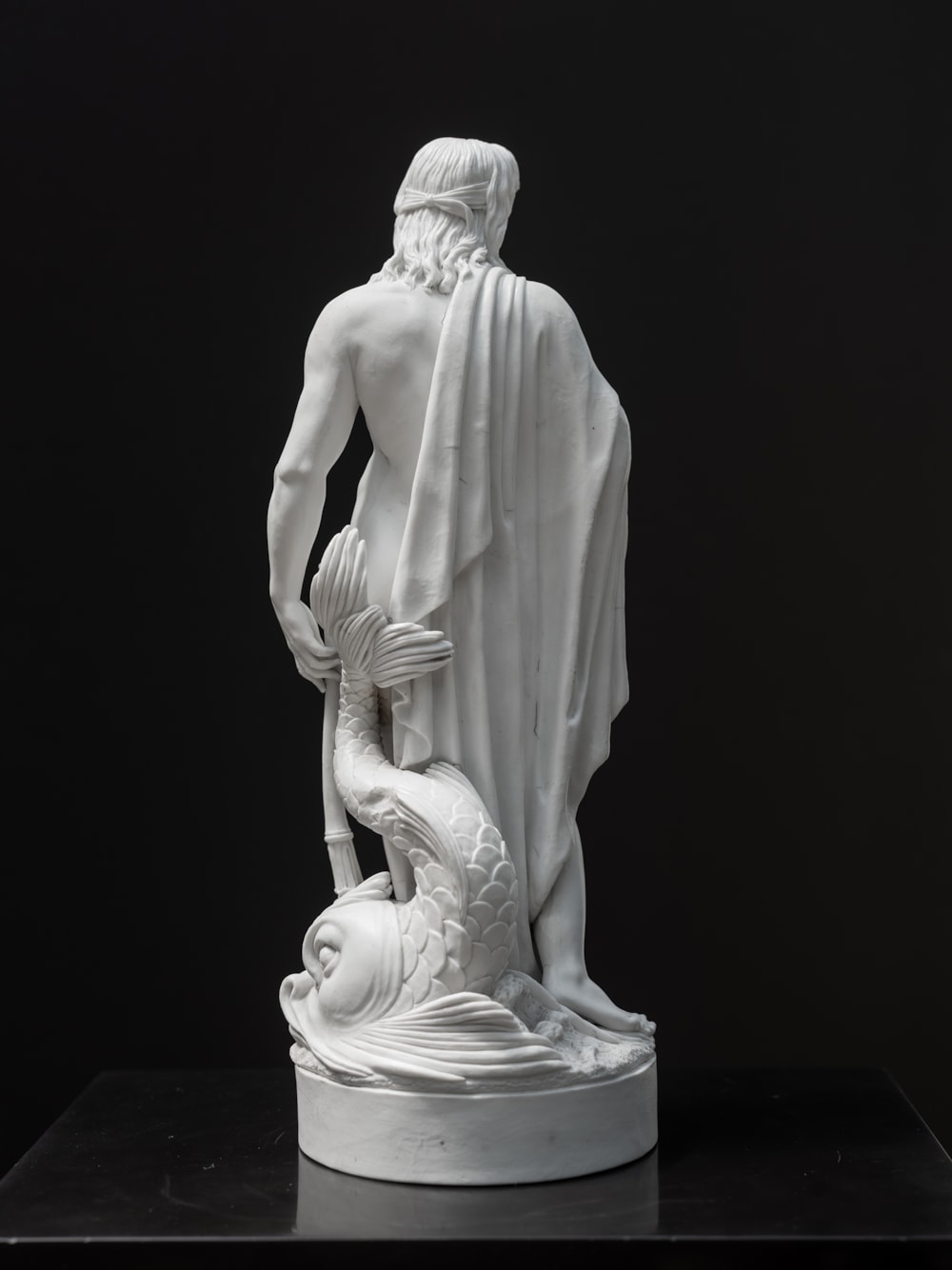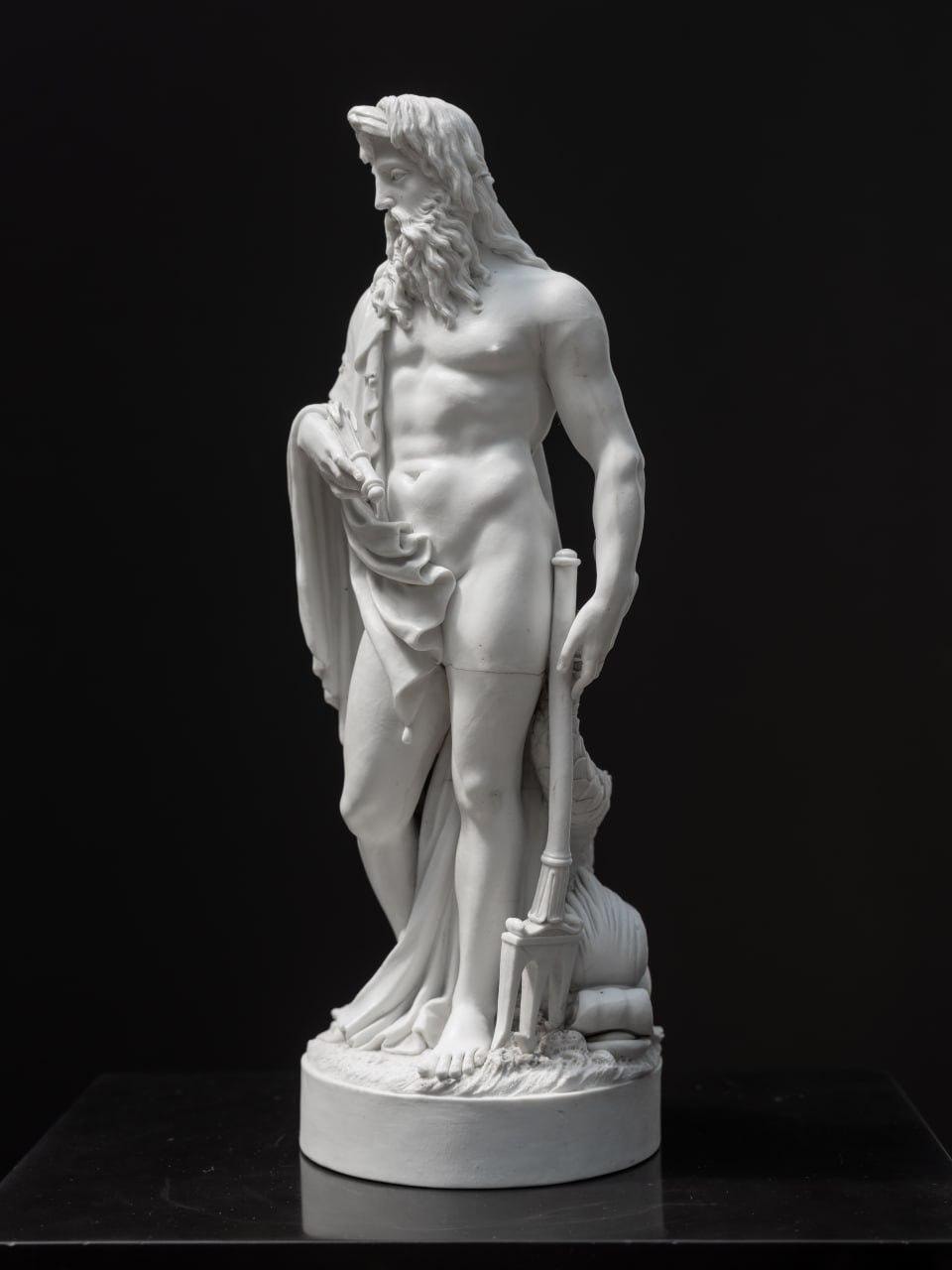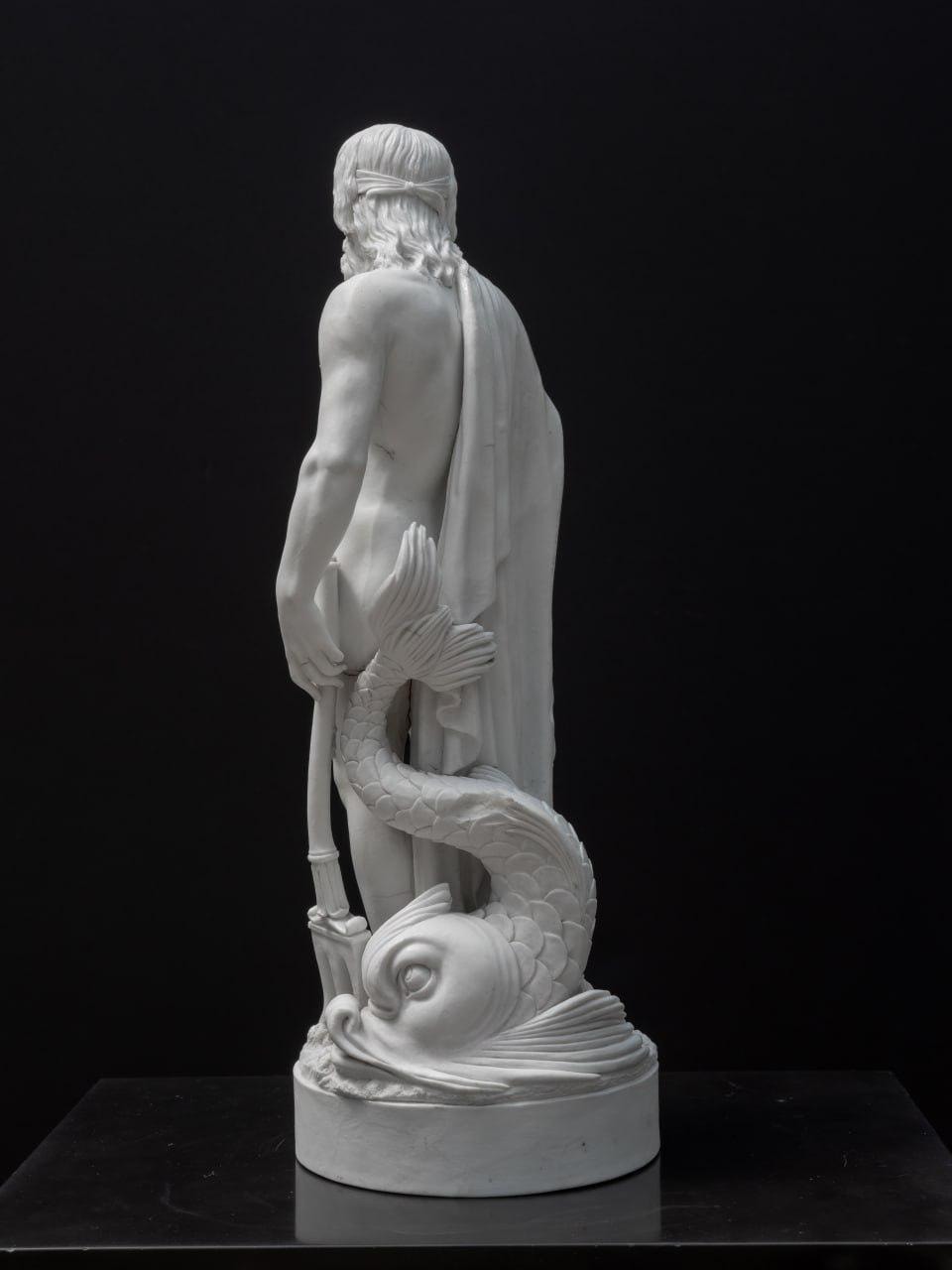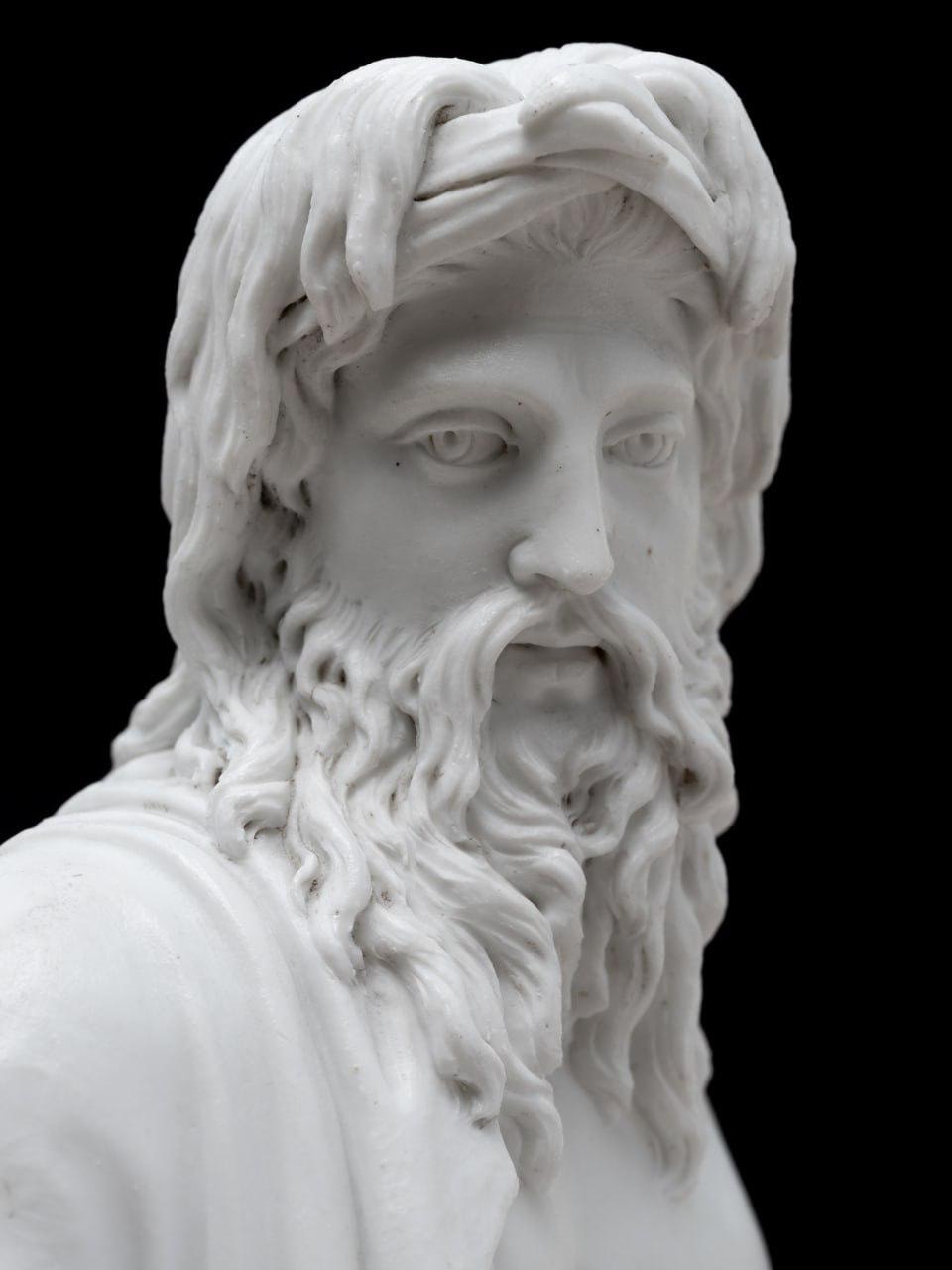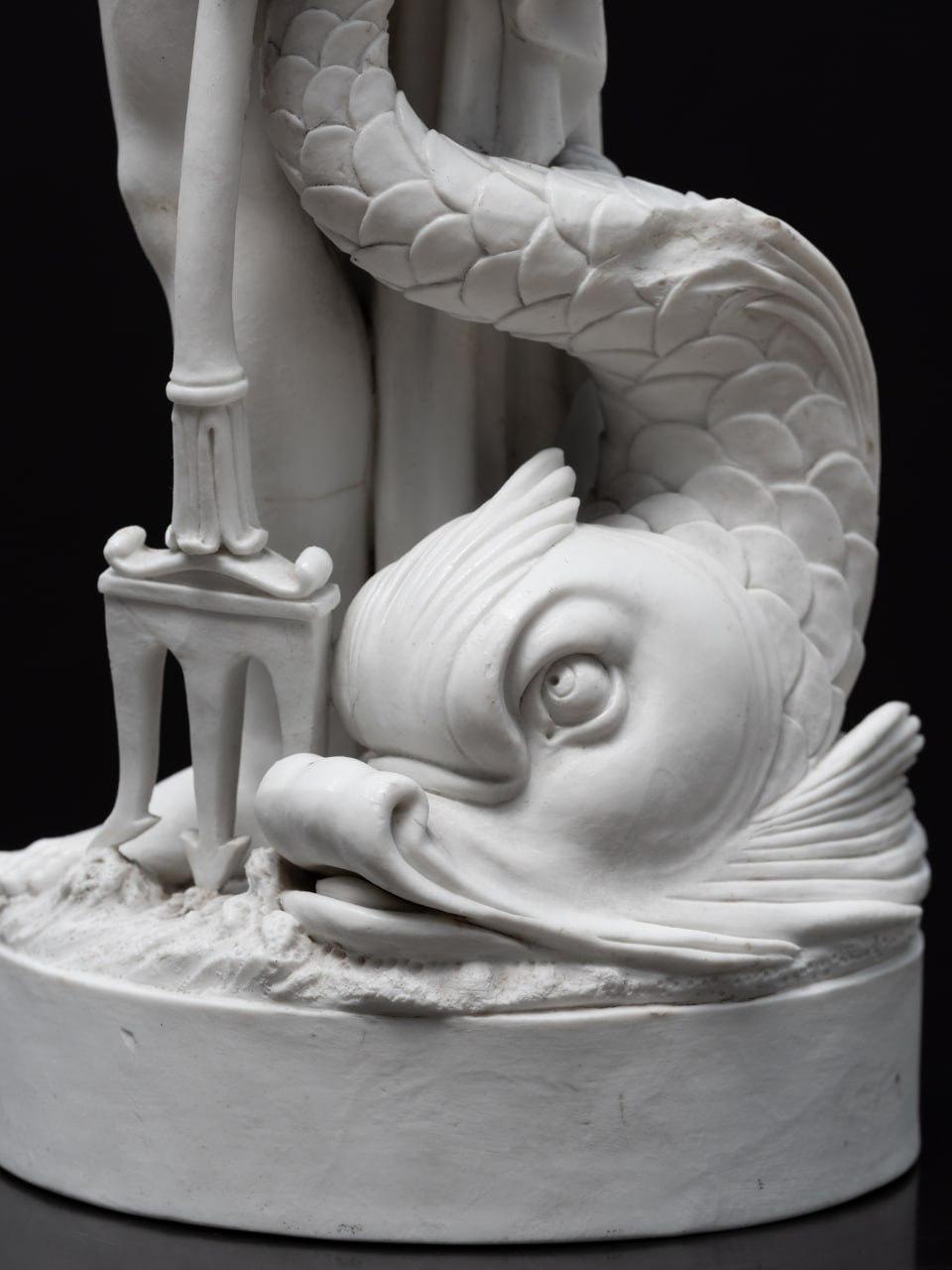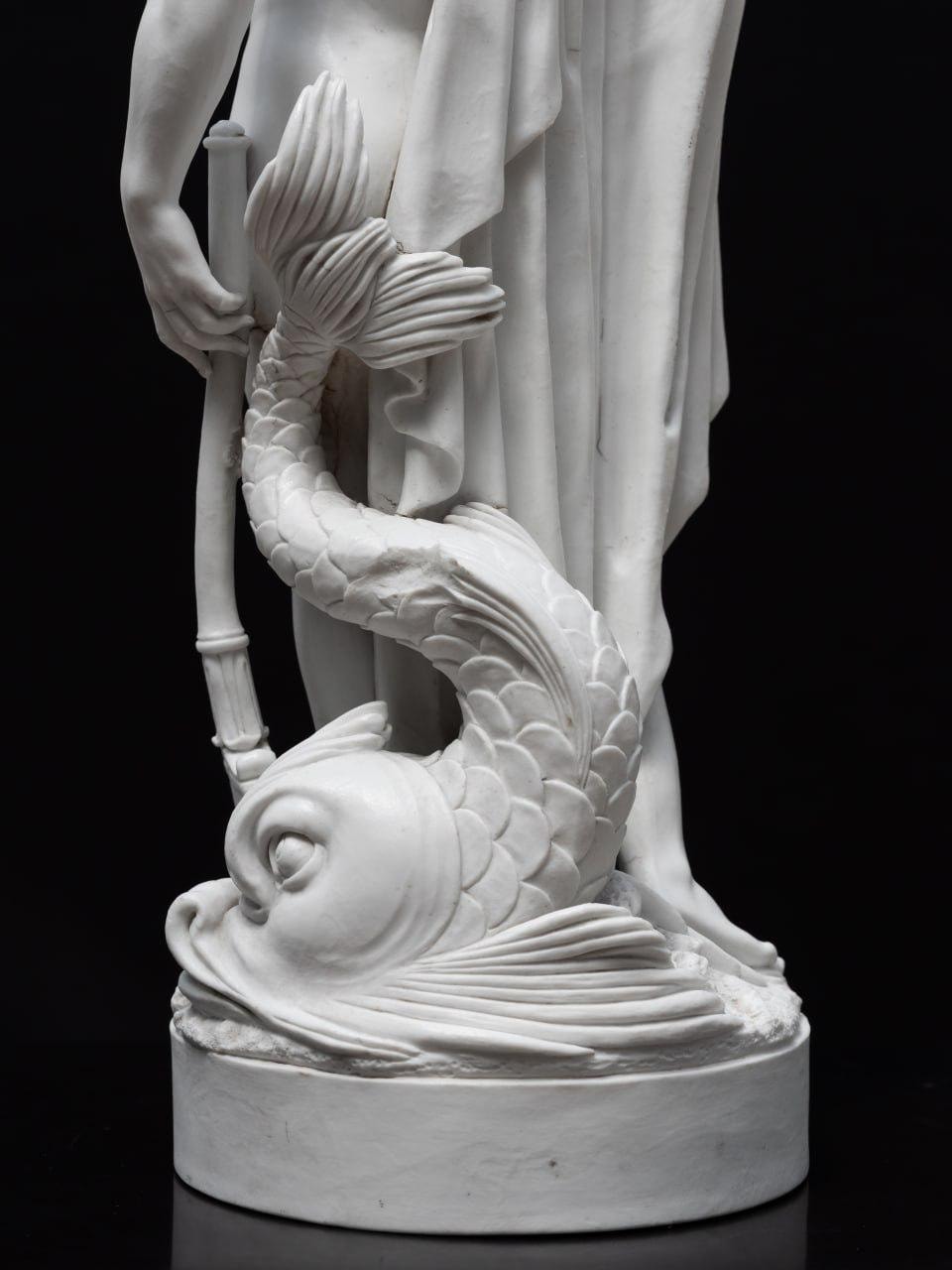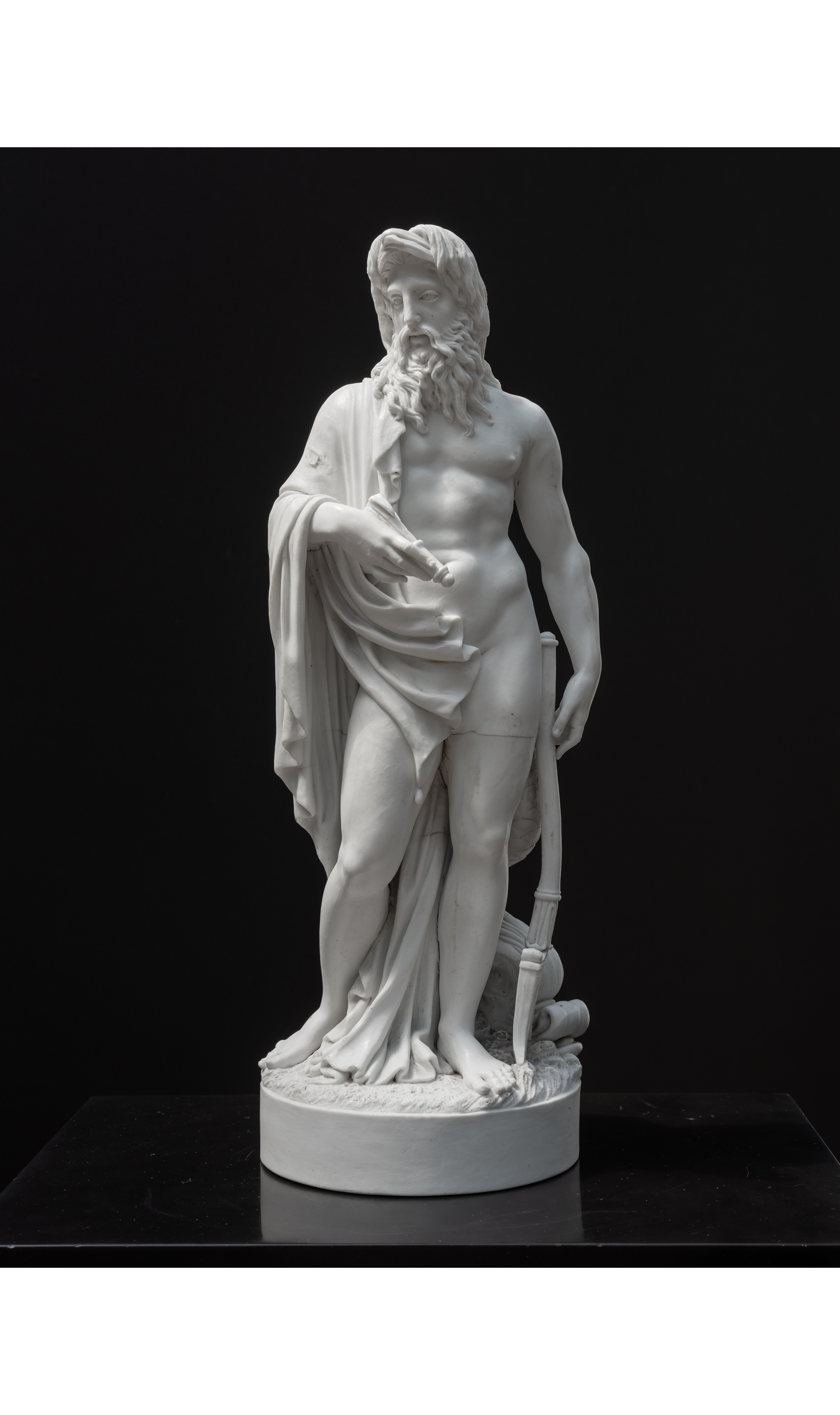
A Continental Nast Biscuit Porcelain Figure of Neptune, Paris Circa 1810.






Nast
A Continental Nast Biscuit Porcelain Figure of Neptune, Paris Circa 1810.
Scultura in Biscuit di Nettuno, manifattura di Nast, Parigi, Circa 1810.
Provenance
Appendino collection Turin
Literature
•Palazzo Reale, Porcellane E Argenti Del Palazzo Reale Di Torino, Fratelli Fabbri, Milano ,1996, pp.296,297.
•Bourgeois Emile, Le Biscuit de Sèvres au XVIIIe siècle; Paris: Goupiol & Cie, 1909; tomo II, p. 13.
Detail Description
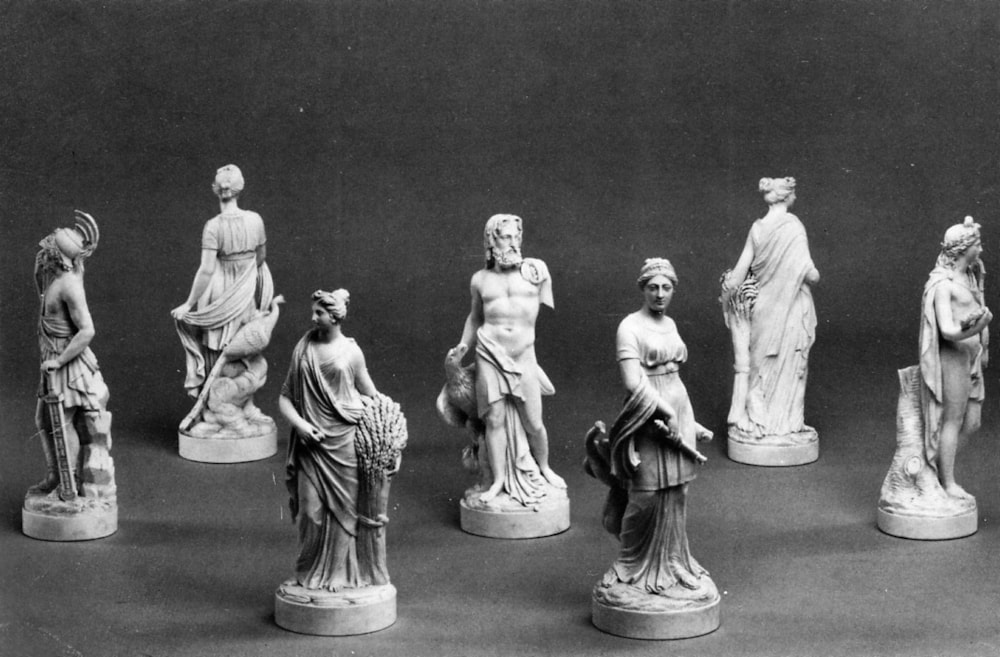
The present piece appears to belong to a series of similar, large-scale biscuit figurines representing classical deities attributed to the Parisian manufacture of Nast today held by the Royal Palace of Turin – from which the figure of Neptune is notably missing.
Historically dated to the late eighteenth century, we believe the group was in fact realized in the early nineteenth. As for the attribution to the Nast manufactory, it is based on the material and stylistic consistency of the group, of which only five pieces are marked ‘NAST’.
The Royal Palace of Turin holds two such series. The present sculpture of Neptune appears consistent with the second group: of seven figures, all ranging in size between 31.7 and 34.7 cm. (see P. San Martino in AA.VV., Porcellane e argenti del Palazzo Reale di Torino, exhibition catalogue, Turin, 1986, cat. nos. 128 and 129, p. 296).
The collections of the Royal Palace of Turin contain a large number of biscuits attributable to the Nast manufactory and dating from the late 18th to the early 19th century, the heyday period of this type of production.
The Nast biscuits were probably acquired by the Savoy Royal House directly from France, as suggested by their absence from the inventories of the residences of the Duchy of Parma and the Pitti Palace in Florence, where the provenance of objects transferred to Turin after the unification of Italy is often traceable. After all, the Savoy court could boast a sizable collection of “figure di porcellane” already from the 1770s onward.
The Nast biscuits today in Turin are documented already in the inventory of Argenti Bisquit of 1869–71. They are described as part of a single group of "21 statuette rappresentanti personaggi Mitologici ", stored on a shelf of the cabinet 7 of the ground floor room of the Royal Palace, where all the biscuit obgects were kept. In fact, recent studies have demonstrated that the figurines belong to two different groups, with appreciable differences in iconography, style and size, constituting two different ‘table services’ or surtout de table (the utilitarian nature of inventory cataloguing is explicitly admitted by the authors, who also note the "height of cent.m (sic) 20 to 30", which is decisive for the grouping of the pieces).
Ten of the twenty-one statuettes can be grouped together in a set certainly attributable to the Nast factory – five examples are marked – which pairs well with another centerpiece from the same manufactory, mentioned separately in the same 1869–71 inventory, composed of seven statuettes. However, since there is no central group large enough to justify the presence of a whole, ideal surtout arrangement, it was probably preferred to opt for a "minimal" intervention in the merging of the different pieces – a fact that may attest to the occasional and contingency-related use of these biscuits in court ceremonial.
Print Format
Additional images